
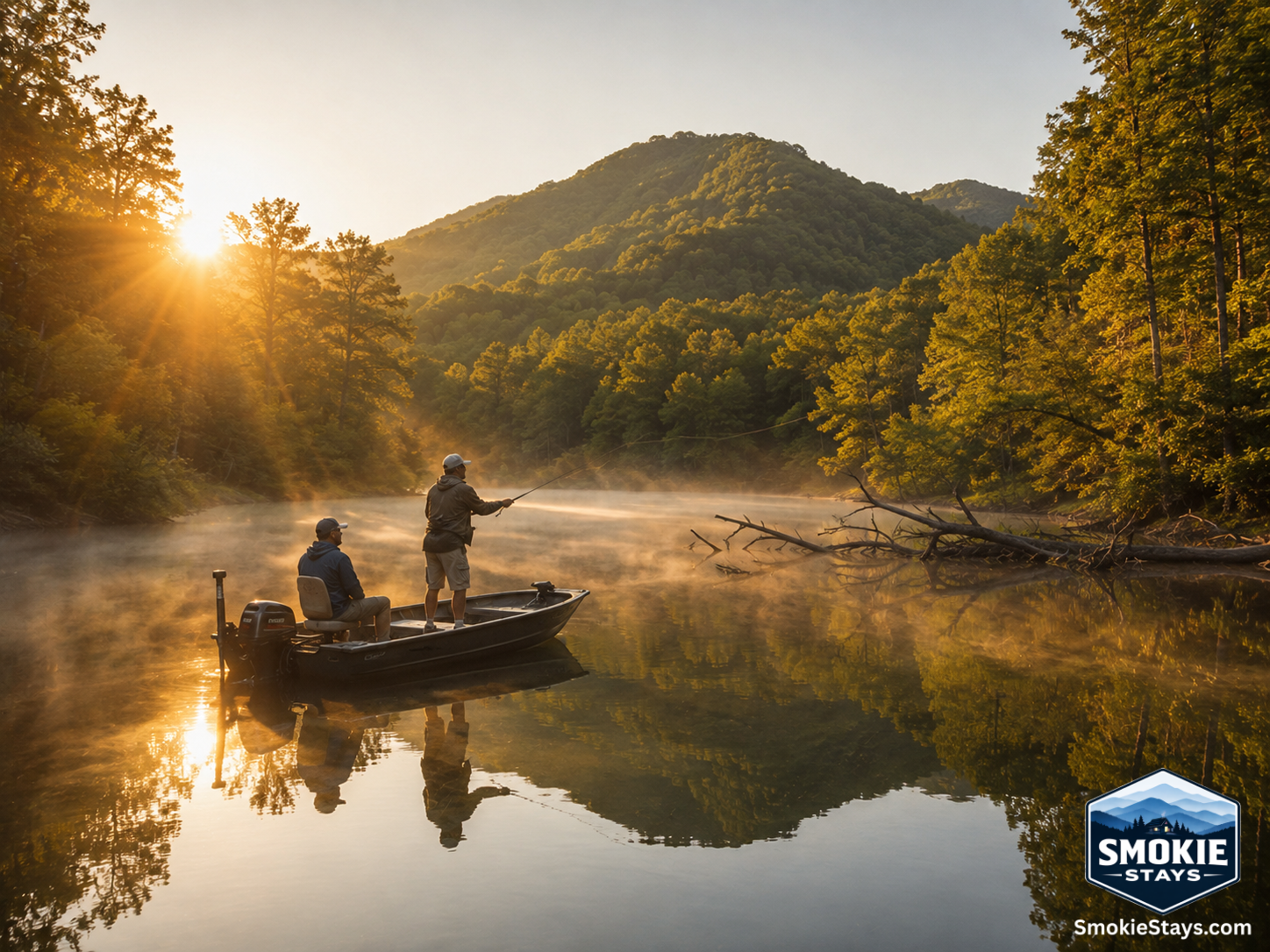
Most visitors to the Smoky Mountains don't think of a 30,400-acre reservoir as part of the experience. They came for the mountains, the waterfalls, the cabin on the ridge — not a lake. But Douglas Lake sits just minutes from Sevierville, within easy reach of Pigeon Forge and Gatlinburg, and it offers something that Great Smoky Mountains National Park — for all its magnificence — doesn't: open water. A boat on a calm morning with the Smoky Mountain ridgeline reflected on the surface. Trophy smallmouth bass in clear water. Crappie stacked around submerged brush in 10 feet of water. A pontoon afternoon with the family that has nothing to do with crowds or parking or a Parkway traffic jam.
The lake is there. Most Smokies visitors don't know to use it.
What Is Douglas Lake?
Douglas Lake is a 30,400-acre TVA reservoir with over 550 miles of shoreline, created by Douglas Dam on the French Broad River. The dam and reservoir were built in 1943 during World War II — completed in just 12 months and 17 days, setting a world record for construction speed at that scale.
The Tennessee Valley Authority still manages the lake today, lowering water levels in the fall to accommodate winter rains and raising them again in spring for summertime recreation. That seasonal cycle affects fishing patterns significantly — spring and early summer, when the TVA is raising levels and fish are staging for spawning, is the most productive window for most species.
The towns of Gatlinburg, Pigeon Forge, and Sevierville sit close to the lake, making them perfect home bases for exploring the surrounding natural beauty. From the Sevierville Parkway corridor, Douglas Lake is approximately 15 to 20 minutes north on US-411 — closer to the main tourist corridor than most visitors realize.
The Fish: What Lives in Douglas Lake
Douglas Lake holds bass, walleye, crappie, catfish, striped bass, muskie, sunfish, white bass, sauger, bluegill, blue catfish, flathead catfish, red breast sunfish, spotted bass, and channel catfish. The diversity is genuine — this is not a lake with two or three viable target species and a lot of habitat that goes underused. Multiple species are actively pursued by different fishing communities across different seasons.
The standout fisheries by species:
Smallmouth Bass: Douglas Lake has a strict 1-fish-per-day limit with a 20-inch minimum size restriction specifically to protect the trophy smallmouth fishery. That regulation tells you what you need to know about the quality of the fish — state wildlife managers don't impose trophy protections on mediocre fisheries. Smallmouth in Douglas are legitimate trophy fish, and the clear-water habitat that develops in the lake's deeper, cooler sections produces the conditions these fish thrive in.
Largemouth Bass: Largemouth and smallmouth bass combined creel limit is 5 fish per day. Largemouth concentrate in the shallower, warmer, more vegetated areas — creek arms, coves with grass, and the transition zones where the main lake meets tributary water. Spring spawning season (late April through May) is the peak period for largemouth action when fish move shallow to beds in the 2-to-6-foot range.
Crappie: Douglas Lake has a history of strong crappie fishing, with healthy populations of both white and black crappie. Crappie typically school around brush, vegetation, and submerged wood. In spring and fall focus on the 8-to-12-foot range. Light line and small hooks with live bait or crappie jigs in a wide variety of colors are the most productive approach.The daily creel limit is 15 fish with a 10-inch minimum length.
Walleye: Walleye become very active on Douglas Lake in spring as water temperatures rise.The daily limit is 5 fish combined with sauger, with a 15-inch minimum for walleye. Walleye are most active in low-light conditions — dawn and dusk trolling runs along main lake points and channel edges produce consistent catches during the spring run.
Catfish: No daily creel limit for fish under 34 inches, with only one catfish over 34 inches allowed per day. Blue catfish, flathead catfish, and channel catfish all inhabit Douglas. Night fishing with cut bait or live bream on the bottom produces year-round catfish action regardless of season.
Striped Bass and White Bass: Both species run the tributary river channels in spring during the spawning migration — the French Broad River arm is the most productive stretch for stripers in the April to May window.
Muskie: Douglas Lake holds a muskie population that draws dedicated trophy hunters. These fish require patience, large presentations, and a specific seasonal approach — fall is the peak period when muskies actively feed before winter.
The 2026 Spring Fishing Outlook
Spring fishing on Douglas Lake is picking up as water temperatures rise from the low-to-mid 50s and climb toward the upper 60s. Douglas Lake really shines in spring — crappie, walleye, and white bass all become very active as the season progresses.
The spring 2026 pattern on Douglas mirrors typical years — bass beginning to stage in pre-spawn locations in early April, crappie moving shallow as water temperatures cross 55 degrees, and walleye becoming most catchable during the brief window before the spawn. Whether you're a seasoned angler chasing trophy smallmouth or planning a relaxing fishing getaway with friends or family, Douglas Lake provides year-round opportunities across multiple species.
Summer on Douglas shifts the productive windows — bass fishing moves to early morning and late evening as midday surface temperatures push fish deeper. Crappie suspend at depth during summer's warmest weeks and return to shallow cover in fall. Fall is widely considered the second-best fishing season on Douglas after spring, with cooling temperatures bringing fish back to predictable feeding patterns.
Boat Launches and Access Points
Douglas Lake has several public boat ramps around the lake:
TVA Free Launch — a one-lane gravel ramp in the northeast sector of the lake off Oak Grove Road, with gravel parking. Free to use.
TVA Public Boat Ramp — located mid-lake on the south side at the north end of the Highway 92 bridge. One-lane gravel ramp with gravel parking.
TWRA Flat Creek Access — a one-lane gravel ramp in the southwest corner of the lake off Providence Road.
Shady Grove Boat Launch — located in the northwest section of the lake off Flora Road, on the north side.
Multiple marinas around the lake offer additional launch facilities, fuel, boat rentals, and fishing guide services. Douglas Dam Road on the western end of the lake provides access to the dam tailwater area, which produces excellent trout fishing below the dam structure.
Fishing Licenses
Tennessee fishing licenses are required for anglers age 13 and older. Licenses can be purchased online through the Tennessee Wildlife Resources Agency at tn.gov/twra, at Walmart locations in Sevierville and Pigeon Forge, at local bait and tackle shops, or at self-service kiosks at select boat ramps. A one-day license covers the basic needs for a single-day trip without committing to an annual license.
The specific trophy smallmouth regulation — 1-fish-per-day, 20-inch minimum — applies to Douglas Lake specifically and is worth knowing before you arrive. Regulations for all other species are available through TWRA's official regulation booklet, downloadable from the TWRA website.
Guided Fishing Trips
For visitors who want to maximize their time on the water without spending days learning the lake, several local fishing guides specialize in Douglas Lake and the surrounding Jefferson County waters. A guided trip provides the boat, tackle, and local knowledge of specific productive locations that would take an independent angler multiple trips to develop.
Whether you're bringing your own boat, booking a guided fishing trip, or simply casting from the shore, there are plenty of opportunities to get on the water. Contact the Sevierville visitor's bureau or search "Douglas Lake fishing guide" for current licensed guide services operating on the lake — availability and rates vary by season and should be confirmed directly.
Beyond Fishing: Recreation on Douglas Lake
Fishing is the primary draw but not the only one. Douglas Lake is also a popular destination for swimming, water skiing, boating, inner tubing, rafting, and parasailing. Campgrounds around the lake offer tent camping, RV camping, and cabin rentals. Many of the marinas have lodging and campgrounds as well.
Boating and water sports: The lake's 30,400 acres provide ample open water for recreational boating away from the fishing-specific coves and creek arms. Pontoon rentals are available at marinas on the lake and are the most practical option for a family day on the water without bringing your own boat.
Swimming: Several areas around the lake offer swimming access — the Douglas Dam campground on the western end has a designated swimming beach. Water temperatures are comfortable for swimming from June through September.
Camping: The TVA campground near Douglas Dam has 65 campsites with water and electric hookup, two handicapped-accessible sites, restrooms with heated showers, a dump station, picnic tables, a swimming beach, a boat ramp, and a walking trail. Self-service campground — call 800-882-5263 for information.The Trotter Bluff Small Wild Area adjacent to the campground features walking trails through 30 acres of mature hardwood forest with limestone sinkholes, spring wildflowers, and views of the dam and tailwaters.
Kayak and canoe: The lake's quieter creek arms and coves are well-suited for paddle craft, particularly in the morning before powerboat traffic builds. The tailwater section below Douglas Dam is a designated paddling area with a put-in managed by the TVA.
Getting There
Douglas Lake is located in Jefferson County, Tennessee — north and slightly east of Sevierville on US-411. From Sevierville, take US-411 north approximately 15 miles to the Dandridge area, where multiple access points and marinas are visible from the highway. From Pigeon Forge, take the Parkway north to Sevierville and connect to US-411 northbound — total drive time approximately 25 to 30 minutes from most Pigeon Forge cabin areas.
The town of Dandridge — the Jefferson County seat and the second-oldest town in Tennessee — sits on the southern shore of Douglas Lake and is worth a stop if you haven't been. The historic downtown, with its 19th-century courthouse and lakeside setting, is one of the more genuinely preserved small-town environments in East Tennessee and provides a lunch stop with more character than anything on the Parkway.
Pairing Douglas Lake With a Smokies Cabin Stay
A cabin in the Sevierville area puts you closest to the lake — 15 to 20 minutes from most Sevierville cabin zones to the primary launch areas. A morning on Douglas Lake and an afternoon at the national park or Dollywood is a genuinely varied Smokies day that most visitors don't piece together because they don't know the lake is that close.
For serious anglers, a multi-day stay built around early morning fishing sessions before the lake's recreational traffic builds, with afternoons and evenings free for the broader Smokies itinerary, is the structure that works best. The lake's trophy smallmouth fishery in particular rewards consecutive morning sessions — fish position changes daily and pattern recognition across multiple days produces significantly better results than a single-day visit.
We keep a small, hand-picked portfolio of cabins across the Sevierville, Pigeon Forge, and Gatlinburg area — take a look at what's available at smokiestays.com/cabins.
Tennessee fishing licenses are required for all anglers age 13 and older. Purchase at tn.gov/twra or at local retailers before your trip. Douglas Lake-specific regulations — including the trophy smallmouth 1-fish-per-day 20-inch minimum — are enforced by TWRA officers on the water. For current water levels, generation schedules, and recreation facility information, visit the TVA's Lake Information page at tva.com.